

PPC vs Local SEO for Plumbers: Which One Actually Grows Your Business in 2026?
If you run a plumbing company, you have two main ways to get found online: pay for the top of Google with ads, or earn your way there with local SEO. Most owners want to know which one wins.
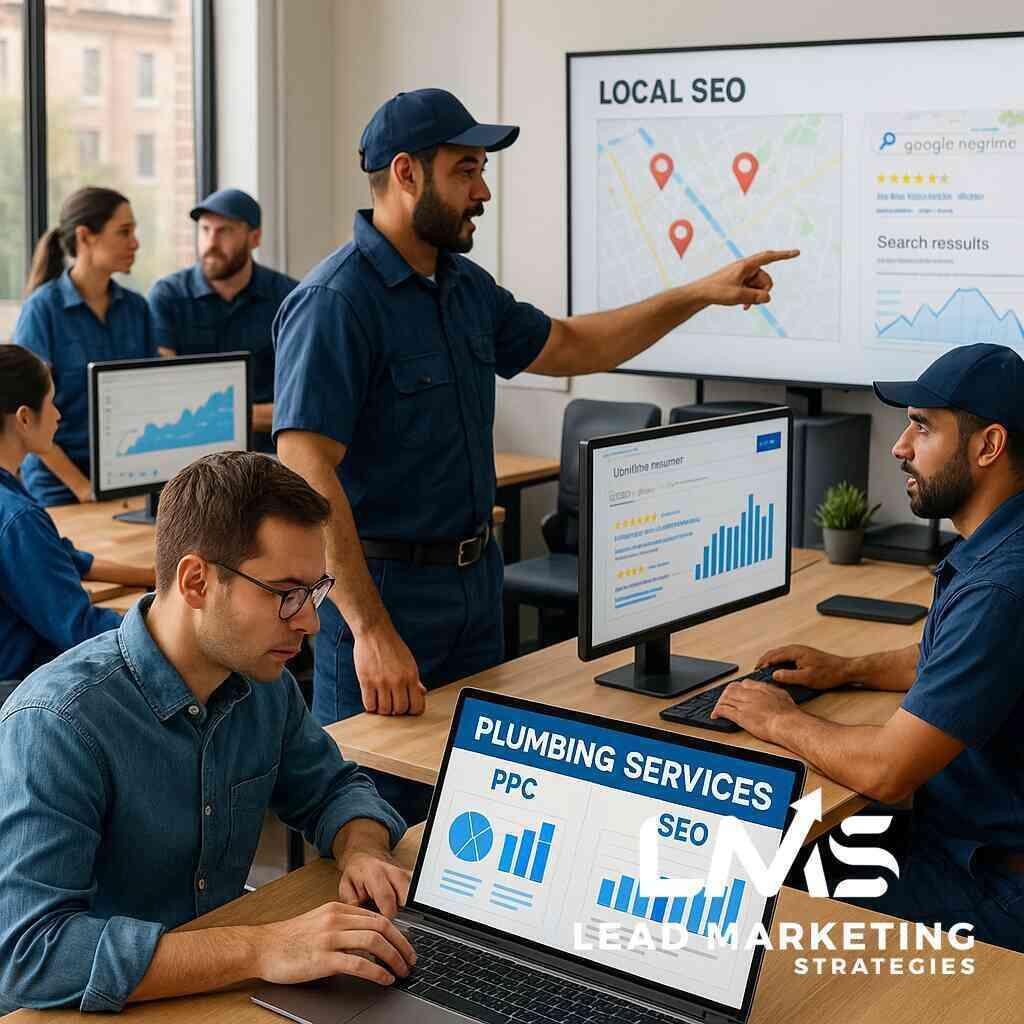
The short answer: you need both, but not at the same time or in the same amounts. PPC (Google Ads and Local Services Ads) buys you immediate calls and lets you control your budget day to day. Local SEO builds durable rankings in the map pack and organic results so you stop paying for every single lead. In our experience, the smartest plumbing businesses start with PPC to generate cash flow, then layer in local SEO so their cost per lead drops over time.
This guide breaks down the real tradeoffs so you can decide where your next marketing dollar goes.
What Is the Difference Between PPC and Local SEO for Plumbers?
PPC is paid advertising where you bid for placement on search results and pay each time someone clicks. Local SEO is the work of optimizing your Google Business Profile, website, reviews, and local citations so you rank in the map pack and organic listings without paying per click.
One is rent. The other is ownership. PPC turns on today and stops the moment you stop paying. Local SEO takes months to build but keeps producing leads long after the work is done. That difference shapes everything else in this comparison.
How PPC works for a plumbing business
You bid on searches like “emergency plumber near me” or “water heater repair [city].” When someone clicks, you pay. Google Ads, Local Services Ads (the Google Guaranteed listings), and call-only campaigns all fall under this umbrella. The appeal is speed and control: you can be at the top of the page this afternoon.
How local SEO works for a plumbing business
You optimize your Google Business Profile, collect reviews, build location and service pages, fix technical issues, and earn local citations. Over time you show up in the map pack and organic results for free. The appeal is compounding returns and trust. When a homeowner sees your business ranked organically with 200 reviews, that carries weight an ad never will.
Which Gets Plumbing Leads Faster, PPC or Local SEO?
PPC gets leads faster. A well-built Google Ads or Local Services Ads campaign can start producing calls within days. Local SEO typically takes three to six months before you see meaningful movement in the map pack, and longer in competitive metros.
That speed matters when you are a newer company or you just opened a second location. Ads fill the gap while your organic presence catches up. We often see plumbers launch PPC first, use the call data to learn which services and neighborhoods convert, then point local SEO at those same opportunities.
When speed should drive your decision
- You just started the business and need calls now
- You added a new service line and want to test demand
- You are entering a new city or service area
- You have slow seasons and need to fill the schedule
Which Costs Less Over Time, PPC or Local SEO?
Local SEO costs less per lead over time. PPC costs less to start. That is the honest tradeoff. Ads give you a predictable cost per lead but you pay for every click forever. Local SEO has a higher upfront investment but your cost per lead drops as rankings mature and calls come in without a per-click charge.
Here is how the cost structure actually breaks down:
PPC costs
- Cost per click: plumbing keywords are competitive, and emergency terms cost the most
- Cost per lead: varies widely by market, service, and how well your landing page converts
- Management: ongoing campaign optimization, negative keywords, bid adjustments
- Scaling: more leads means more spend, almost linearly
Local SEO costs
- Upfront work: website improvements, location pages, Google Business Profile optimization
- Ongoing content: service pages, blog posts, review generation
- Citations and listings: consistent business info across directories
- Scaling: once ranked, additional leads cost you very little
We tell plumbing owners to think of PPC as a faucet and local SEO as a well. The faucet is instant but metered. The well takes time to dig but never runs dry. For a deeper look at the cost math, see our breakdown of Google Ads versus local SEO for plumbing businesses.
Do Homeowners Click Ads or Organic Results for Plumbers?
Both, depending on urgency. When a pipe bursts at 11pm, homeowners click the first credible ad or map listing they see. When they are planning a repipe or a bathroom remodel, they research more and lean toward organic results and reviews.
That split is why a single-channel strategy leaves money on the table. Emergency searches reward paid placement. Planned projects reward reputation and organic visibility. If you only run ads, you miss the researchers. If you only do SEO, you miss the panicked caller who needs help right now.
The emergency vs. planned project split
Emergency plumbing searches are high-intent and time-sensitive. Ads and Local Services Ads dominate here because speed wins. Planned work like water heater replacement, repiping, or fixture upgrades involves comparison shopping. Homeowners read reviews, check your website, and call two or three companies. Local SEO and reputation management for plumbers win that race.
How Does Local SEO Help Plumbers Win the Map Pack?
Local SEO gets you into the Google map pack, the three-listing block that appears above organic results for local searches. Winning that spot comes down to relevance, distance, and prominence, and prominence is where most plumbing businesses can improve fastest.
Google weighs your Google Business Profile heavily. Reviews, photos, service categories, business hours, and consistent name, address, and phone data all matter. So does your website: location-specific service pages, schema markup, and fast mobile load times help Google understand what you do and where you do it.
What actually moves the needle in the map pack
- Review volume and recency: steady new reviews signal an active business
- Google Business Profile completeness: every service, every area, real photos
- Local citations: consistent listings across directories and industry sites
- Location pages: a dedicated page for each city or neighborhood you serve
- Proximity: you cannot change it, but you can compensate with stronger signals
If you want a step-by-step walkthrough, our guide to local SEO success for plumbers covers the full process.
What Should a Plumbing PPC Campaign Include in 2026?
A strong plumbing PPC campaign includes Local Services Ads, a tightly themed Google Ads search campaign, call tracking, and a landing page built for phone calls. Skip any one of those and you leave money on the table.
Local Services Ads deserve special attention. They put you at the very top of the page with the Google Guaranteed badge, and you pay per lead rather than per click. For plumbers, that model often outperforms standard search ads on cost per booked job.
PPC tactics that separate winners from wasters
- Match campaign type to intent: emergency keywords in one campaign, planned services in another
- Use call-only and call extensions: most plumbing leads are phone calls, not form fills
- Build negative keyword lists: filter out DIY, jobs, and parts searches
- Target by radius, not just city: your service area is usually a drive-time map
- Track calls to booked jobs: clicks are vanity, booked work is the metric
- Test landing pages: a slow page or buried phone number kills conversion
Pairing search ads with Facebook ads for plumbing companies can also reach homeowners before they search, which is useful for seasonal promotions and maintenance plans.
Can You Run PPC and Local SEO Together?
Yes, and that is what we recommend for most established plumbing businesses. Run PPC for immediate leads and to cover high-value services, while local SEO builds your long-term position. The two feed each other.
Here is the practical benefit: your PPC data tells you which services and neighborhoods generate the most revenue. You then point local SEO at those exact opportunities instead of guessing. Meanwhile, your organic rankings and reviews make your ads more credible, because homeowners often check your website and reviews after clicking an ad.
A simple budget split to start with
Newer plumbing companies often put more weight on PPC early, then shift toward local SEO as rankings mature. Established companies with strong reviews can lean harder on SEO and use PPC to defend high-value keywords and fill seasonal gaps. There is no universal percentage. The right split depends on your market, your competition, and how fast you need leads.
What Do Most Plumbers Get Wrong About PPC vs Local SEO?
The biggest mistake is treating them as an either-or decision. The second biggest is judging local SEO by its first 60 days, when it has barely had time to work.
We also see plumbing businesses pour money into ads without tracking which calls turn into booked jobs. That makes it impossible to know what is working. And we see local SEO efforts stall because nobody is consistently asking for reviews. Reviews are the single most controllable ranking factor in local search, and they double as social proof on your ads.
Mistakes to avoid
- Turning off PPC the moment SEO starts ranking, then losing emergency calls
- Running ads to a homepage instead of a focused service landing page
- Ignoring Local Services Ads because “we already do Google Ads”
- Chasing rankings in cities you do not actually serve
- Letting negative reviews sit unanswered, which hurts trust and conversion
Handling reviews well is its own skill. Our guide to managing negative reviews for plumbing brands walks through the response playbook.
How Do You Measure Which Channel Is Working?
Measure booked jobs and revenue per channel, not clicks or impressions. Set up call tracking with a unique number per channel, tag form submissions, and connect the dots to your scheduling software or CRM.
Then compare cost per booked job, not cost per lead. A channel that produces cheap leads that never book is worse than one with a higher lead cost and a strong close rate. Review this monthly. Plumbing demand shifts with seasons, weather, and local competition, and your budget should shift with it.
Metrics that actually matter
- Cost per booked job by channel
- Call answer rate and average response time
- Close rate on inbound calls
- Revenue per lead source
- Review volume and average rating month over month
If lead flow is your bottleneck, our plumbing lead generation services are built around exactly these numbers.
Frequently Asked Questions
Is PPC or local SEO better for a new plumbing business?
PPC is usually better for a brand-new plumbing business because it produces calls immediately while local SEO builds. Start with Local Services Ads and a focused Google Ads campaign, then invest in local SEO from month one so you are not renting every lead forever.
How long does local SEO take to work for plumbers?
Most plumbing businesses see early movement in three to six months and stronger results in six to twelve. Competitive metros take longer. Reviews, Google Business Profile activity, and location pages are the fastest levers you control.
How much should a plumber spend on Google Ads?
There is no fixed number, but your budget should be enough to stay visible during your service hours in your core service area. Start with a test budget, track cost per booked job, and scale what works. Spending too little spreads your ads thin and produces inconsistent data.
Do Google Guaranteed Local Services Ads beat regular Google Ads for plumbers?
Often, yes. Local Services Ads sit at the top of the page, carry the Google Guaranteed badge, and charge per lead rather than per click. Many plumbers see a better cost per booked job there. That said, standard search ads give you more control over messaging and landing pages, so most strong campaigns use both.
Can local SEO replace PPC entirely?
For some mature plumbing businesses with strong reviews and deep content, organic and map pack leads can carry most of the load. But PPC still earns its place for emergency keywords, seasonal pushes, and new service areas. Most companies keep a modest ad budget running even after SEO matures.
Let Our Team Help You Decide
You do not have to guess at the right mix. We help plumbing businesses build a plan that matches their market, their budget, and how fast they need the phone to ring. If you want a clear answer on where to put your next marketing dollar, book a free consultation with our team and we will map it out with you. Prefer to talk it through right now? Call us at (833) 532-3100.
And if you want to keep up with your leads from anywhere, download our mobile app for iOS or Android. It keeps your pipeline in your pocket.
Every article is written by one of our founders and independently reviewed by the other before it goes live.

Ken Key is the Chief Technology Officer and Co-Owner of Plumbing Marketing Strategies. He is a full-stack software, AI, and SEO engineer who helps plumbing companies turn their websites and lead flow into real booked jobs. He runs the agency with his wife and co-owner, Dominique Key, and treats every client like a neighbor.

Dominique Key is Chief Marketing Officer and Co-Owner of Plumbing Marketing Strategies. She helps plumbing company owners turn their reputation into steady, predictable lead flow. A wife and mom, she runs the agency with her husband Ken and treats every client like family.