

What Is the Best HVAC SEO Plan for Small Businesses in 2026?
If you run a small HVAC company, you do not need a bloated agency retainer to rank well. You need a focused plan that puts your business in front of homeowners at the exact moment their furnace quits or their AC dies in July.
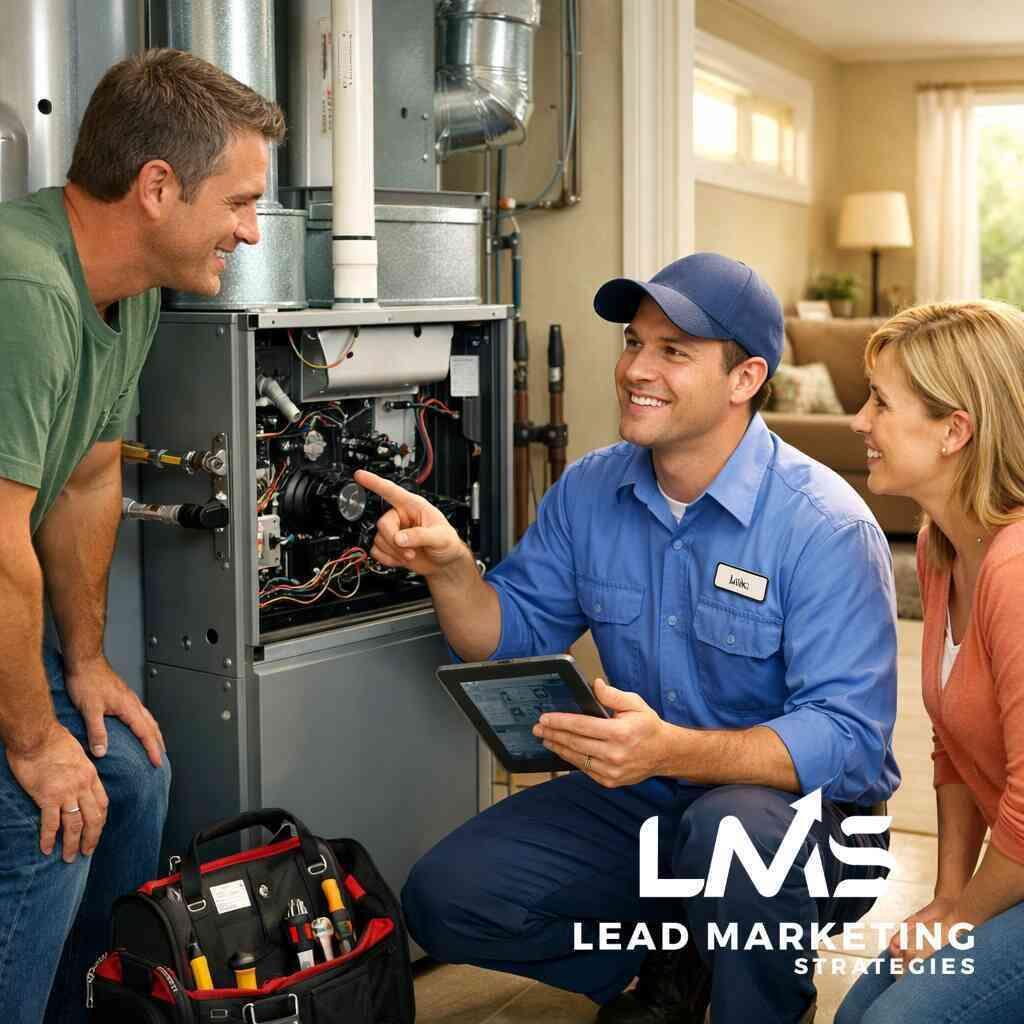
The best HVAC SEO plan for small businesses in 2026 combines a fast, well-built website, a fully optimized Google Business Profile, location and service pages that match how people search, a steady flow of local reviews, and paid ads layered on top to cover the gaps while organic rankings mature. Do those five things consistently and you will outrank bigger competitors who treat SEO like a checkbox.
We work with home service contractors every day, and the pattern is always the same. The companies that win are not the ones spending the most. They are the ones who built the right foundation and kept at it. Here is the full plan.
Why does HVAC SEO look different for small businesses in 2026?
Search behavior has shifted. Homeowners now ask AI assistants and voice search for “AC repair near me” instead of scrolling ten blue links. Google leans harder on proximity, reviews, and profile completeness than it did a few years ago.
That actually favors small local operators. A one-location HVAC shop with 80 recent five-star reviews and a tight service area can beat a regional chain that has a bigger site but a thin local footprint. The catch is that you have to be intentional about it. Spray-and-pray content no longer moves the needle.
What changed most recently
- AI overviews and answer engines now summarize results at the top of the page. Being the source those summaries quote matters more than raw keyword density.
- Google Business Profile signals carry more weight for “near me” and map pack rankings.
- Review velocity and recency are weighed more heavily than a big lifetime total.
- Page speed and mobile experience are table stakes. Slow sites get buried.
We built our approach around answer engine optimization for exactly this reason. When your pages answer real questions in plain language, both Google and AI tools can pull from them.
What are the core pieces of an HVAC SEO plan that actually works?
Five pillars, in priority order. Skip any one of them and the rest underperform.
1. A website built to convert, not just to look nice
Your site has one job: turn a panicked homeowner into a phone call. That means your phone number visible above the fold on mobile, service pages for each major offering (AC repair, furnace installation, heat pump service, duct cleaning, maintenance plans), and clear calls to action on every page.
Speed matters more than most owners realize. Aim for a load time under three seconds on mobile. Compress images, cut unnecessary plugins, and use a clean hosting setup.
2. A fully optimized Google Business Profile
This is the single highest-leverage asset for a local HVAC company. Fill out every field. Pick the most specific primary category you can (HVAC contractor, air conditioning repair service, furnace repair service). Add your service area, hours, and a real description.
Then post to it weekly. Add photos of actual jobs. Answer questions in the Q&A section before customers ask them. Respond to every review within 48 hours.
3. Location and service pages that match real searches
People search by service and by city. Build a dedicated page for each meaningful combination: “AC repair in [city],” “furnace installation in [neighborhood],” “emergency HVAC service near [landmark].” Do not spin up 200 thin pages with swapped city names. That gets you penalized.
Instead, build 8 to 15 genuinely useful pages. Include local details, real photos, response times, and answers to questions specific to that area. If you want a deeper walkthrough, our guide to local SEO success covers the page structure we use.
4. A review engine that runs on autopilot
Reviews are the currency of local search. Set up an automated text or email request after every completed job. Make it one tap. Ask technicians to mention it at the end of the visit.
You do not need to game the system. You need a steady drip of honest feedback. Reputation management done right also protects you when a bad review lands. Our team handles this for contractors through reputation management services, and the difference it makes in map pack rankings is real.
5. Paid search to fill the pipeline while SEO builds
SEO takes months. Google Ads can put your phone ringing this week. Run a tight local campaign on high-intent terms like “emergency AC repair” and “furnace not working.” Set a budget you can sustain and track every call.
We wrote a full breakdown of Google Ads versus local SEO that applies just as well to HVAC. The short version: use both, but let SEO carry the long game.
Which HVAC keywords should a small business target first?
Start with terms that have buying intent and manageable competition. Ranking for “HVAC” alone is a waste of time. Ranking for “emergency furnace repair in [your city]” pays the bills.
Priority keyword tiers
- Emergency and repair terms: “AC repair near me,” “furnace repair [city],” “emergency HVAC service.”
- Installation and replacement terms: “AC installation [city],” “heat pump replacement cost.”
- Maintenance terms: “HVAC tune-up [city],” “furnace maintenance near me.”
- Informational terms: “why is my AC not cooling,” “how often should you service a furnace.”
The first three tiers drive calls. The fourth tier builds authority and feeds AI overviews. You need both, but lead with the money terms.
How do you optimize HVAC service pages for local search and AI answers?
Answer the question in the first two sentences, then expand. That structure works for Google’s featured snippets and for AI tools that summarize results.
A simple page formula
- H1 with the service and city (for example, “AC Repair in Round Rock, TX”).
- A two-sentence direct answer to what the searcher wants to know.
- Pricing context where you can give it. Ranges beat silence.
- Service area details with real neighborhoods or landmarks.
- Reviews and photos from actual local jobs.
- A clear call to action with your phone number and a booking link.
Keep paragraphs short. Three to four sentences max. Use question-style subheads because that is how people search now. Our content marketing team builds pages this way for contractors because it consistently earns both rankings and citations.
How much should a small HVAC business spend on SEO in 2026?
Most small HVAC companies should plan on a monthly investment in the low-to-mid four figures for a complete program, or a smaller amount if you are starting with just local SEO and reviews. The right number depends on your market size and how many jobs you can handle.
Be wary of anyone quoting a flat $299 a month for “full SEO.” That usually buys you a template report and nothing that moves rankings. Ask what specific work happens each month: how many pages, how many citations, who writes the content, and how they measure calls.
What to track
- Phone calls from organic and map pack
- Form submissions and booked appointments
- Map pack rankings for your top 10 keywords
- Review count and average rating
- Cost per booked job, not cost per click
Calls and booked jobs are the only metrics that matter. If your SEO partner cannot show you call tracking, find a new one. Our lead generation services are built around that single number.
What role do reviews and reputation play in HVAC SEO?
A large one. Reviews influence map pack rankings, click-through rates, and whether a homeowner calls you or the next company. In our experience, the businesses that ask for reviews consistently, every single week, outrank competitors with better websites.
Respond to every review, good and bad. Thank the positive ones by name. Answer negative ones calmly and offer to make it right offline. That public response is read by every future customer. For a deeper playbook, see our reputation marketing strategies.
Should small HVAC companies use social media and email as part of SEO?
Social media does not directly move rankings, but it supports them. A steady Facebook presence keeps your brand in front of past customers, which drives branded searches. Branded searches signal authority to Google.
Email is even more direct. A simple quarterly reminder about tune-ups to your existing customer list produces booked jobs at almost no cost. If you want help setting that up, our email marketing and social media marketing teams handle it for contractors regularly.
How long does HVAC SEO take to work?
Expect meaningful movement in local rankings within three to four months if your Google Business Profile and reviews are in order. Competitive organic rankings for high-value service terms typically take six to nine months. Emergency and long-tail terms often rank faster than broad ones.
Anyone promising page one in 30 days is either lying or planning to use tactics that will get you penalized. Steady, honest work compounds. We tell every contractor the same thing on day one: the first 90 days are foundation, months four through nine are growth, and after that you are defending a lead.
What mistakes kill HVAC SEO for small businesses?
We see the same handful of problems over and over. Avoid these and you are ahead of most of your market.
- Thin location pages with nothing but a swapped city name.
- Ignoring the Google Business Profile after the initial setup.
- No review request process or asking only when a customer complains.
- Chasing vanity keywords like “best HVAC company” instead of “AC repair near me.”
- Slow, cluttered websites that lose mobile visitors in the first three seconds.
- No call tracking, so you never know what is actually working.
Frequently asked questions about HVAC SEO
Is SEO worth it for a small HVAC company?
Yes, if you plan to be in business for more than a year. SEO produces compounding results. Every page you rank and every review you earn keeps working for you. Paid ads stop the moment you stop paying.
How many reviews do I need to rank in the map pack?
There is no magic number. Consistency and recency matter more than total volume. A business with 60 recent reviews often outranks one with 200 old ones. Aim for a steady flow every month and respond to all of them.
Can I do HVAC SEO myself?
You can handle the Google Business Profile, review requests, and basic on-page updates yourself. Technical SEO, content strategy, and competitive keyword work usually need a specialist. Many owners start DIY and bring in help once they see the ceiling.
Do I need a separate page for every city I serve?
Only for cities where you genuinely do meaningful work and can write something useful. Ten strong pages beat fifty thin ones. Google is good at spotting pages built purely to rank.
What is the fastest way to get more HVAC leads right now?
Google Ads on emergency and repair terms, paired with a fast landing page and call tracking. That produces calls within days while your SEO foundation builds underneath it. Our proven lead generation tactics cover this in detail.
Ready to build an HVAC SEO plan that actually fills your schedule?
You do not have to figure this out alone. Our team builds SEO plans for home service contractors that focus on one thing: booked jobs, not vanity rankings. We will look at your current site, your Google Business Profile, and your reviews, then tell you exactly what to fix first.
You can book a free consultation and we will walk through your market together. Prefer to talk right now? Call us at (833) 532-3100 and we will pick up.
And if you want to keep an eye on your marketing from your phone, grab our free mobile app. Download it for iOS here or Android here. It puts your leads, reviews, and campaign updates in one place.

The Plumbing Marketing Strategies Team
Our team of marketing experts specializes in helping plumbers grow their businesses through strategic digital marketing, SEO, and customer acquisition.
View all articles