

The fastest HVAC SEO signals are Google Business Profile optimization, NAP consistency, strong service area pages, reviews and trust signals, and a fast mobile site that converts clicks into calls. If your phone is quiet while competitors are buried in map pack calls, one of these five areas is usually leaking leads.
Many contractors know that frustration well. The trucks are busy, the techs are good, and the work is there, but Google keeps sending calls to someone else. In most cases, the gap comes down to a few local ranking signals, not some mystery algorithm.
Key Takeaways
- Google Business Profile optimization drives the fastest map pack gains when categories, service areas, photos, and Q&A align with search intent.
- NAP consistency across directories and citations tells Google your business is real and stable, which supports local HVAC rankings and plumber lead generation.
- Service area pages work best when they target one neighborhood or town at a time with problem-based language, not a generic city page.
- Reviews and trust signals improve both rankings and click-through rate because homeowners trust proof before they trust a promise.
- Speed and mobile conversion matter because a slow, awkward site loses the call even after you earn the click.
-
Google Business Profile optimization that makes the map pack stop ignoring you
Google Business Profile optimization is often the fastest local ranking lever because it tells Google exactly who you are, what you do, and where you work. A filled-out profile can still lose if the primary category is weak, the service area is vague, or the photos look stale. For HVAC local SEO, that setup work matters more than most contractors realize. If you want a clean starting point, I usually point teams to our Google Business Profile guide.
Why a fully filled profile still loses to the company with better category choices and service area setup
I have seen fully completed profiles lose to smaller competitors because the category choice was off by one step. The primary category should match the main revenue line, not the broadest label you can think of. Then tighten the service area so Google understands you cover specific suburbs, not half the state.
For example, an HVAC company in Commack may serve Smithtown, Huntington, and nearby North Shore towns, but if the profile reads like a generic contractor, the local signal gets diluted. That matters in crowded suburbs like Long Island and North Jersey, where map pack ranking factors are tight and proximity alone is not enough. Local service area optimization beats vague coverage every time.
A good profile also supports emergency HVAC marketing. If someone searches at 8 p.m. for a failed condenser or a no-heat call, Google wants to know you are ready for that job right now. That is why our team connects this work to local SEO and not just profile maintenance.
The photo, post, and Q&A signals that push HVAC local SEO clicks in crowded suburbs like Long Island and North Jersey
Photos are not decoration. They are proof. Trucks at a job site, a clean van wrap, a tech replacing an evaporator coil, or a dispatcher desk with real branding all help conversion and brand authority. Add posts that mention seasonal HVAC campaigns, financing notes, and common problems like refrigerant loss or clogged drain lines.
The Q&A section is underused. I recommend answering the same questions homeowners ask your dispatcher:
- Do you service my town?
- Do you offer same-day emergency calls?
- Do you install heat pumps and central AC?
- Do you work on residential and commercial systems?
One client in Suffolk County had a profile that looked decent on paper but barely converted. We rewrote the categories, added service-area posts, and cleaned up the Q&A. Calls improved because the listing finally matched what people were searching for, not what the company thought it should say.
-
NAP consistency that tells Google you are the same contractor everywhere it checks
NAP consistency means your name, address, and phone number stay identical across your website, Google profile, directories, and citations. Even one mismatched suite number or old tracking line can weaken trust and slow local HVAC rankings. Google uses those repeated signals to confirm you are the same contractor everywhere it checks, especially when local citations for contractors are spread across the web.
How one mismatched suite number or old phone line can weaken local HVAC rankings across directories and citations
This part is genuinely confusing for most owners. You may have a main line on the website, a call tracking number in ads, and an old citation on a directory from years ago. To Google, that looks like three businesses unless the signals are reconciled.
Here is the part most owners miss: the problem is not just rankings. It is also routing. If a dispatcher updates one platform and forgets another, the wrong number can keep circulating. That hurts plumber call tracking, HVAC lead generation, and the clarity of your local footprint.
NAP issueWhat Google may readTypical resultOld phone number on citationsSeparate entityLower trust and weaker map visibilitySuite number mismatchDifferent locationLost local relevanceBusiness name variationsBrand confusionSlower citation authority growthFor contractors working in Commack or Ronkonkoma, the fix is usually boring but effective. Standardize the business name, address format, and main line. Then clean the core citations before chasing new ones. That sequence saves dispatcher time and prevents duplicate listings.
The citation clean up sequence that helps a Commack or Ronkonkoma contractor build trust without wasting dispatcher time
I like a simple order:
- Fix the website footer, contact page, and schema.
- Update Google Business Profile.
- Correct major directories.
- Remove duplicates.
- Push the corrected data to secondary citations.
That process supports plumbing SEO services as well as HVAC work, because Google rewards consistency across service businesses. If your company also runs category targeted advertising and local SEO, this same cleanup helps ad quality and landing page trust.
A clean NAP profile also helps with Google Ads for plumbers and HVAC advertising strategies. Ads perform better when the landing page, profile, and citation trail all say the same thing. That consistency lowers friction before the lead even reaches your office.
-
Service area pages that rank when the trucks are already in the neighborhood
Service area pages rank best when they match one real neighborhood, town, or borough and solve a specific local problem. One generic location page rarely wins because it lacks local relevance and clear intent. Strong service page optimization uses place names, nearby landmarks, and problem-based keywords so Google sees a real reason to rank you for heating and cooling marketing.
Why one generic location page misses the mark and how local service area optimization wins for heating and cooling marketing
A single areas-we-serve page is too thin for most HVAC companies. You need pages that feel local and useful, not stitched together from city names. The best pages mention common issues in that area, the housing stock, and the service type people actually need. For example, a page for a neighborhood with older homes should discuss boiler repair, ductwork issues, and emergency HVAC marketing. A page for newer developments can focus on AC maintenance, heat pumps, and indoor air quality. That is what local service area optimization looks like in practice. I also recommend linking these pages to stronger service content, like content marketing for plumbers when you need broader educational support. Google likes connected topical depth, and homeowners like specific answers. 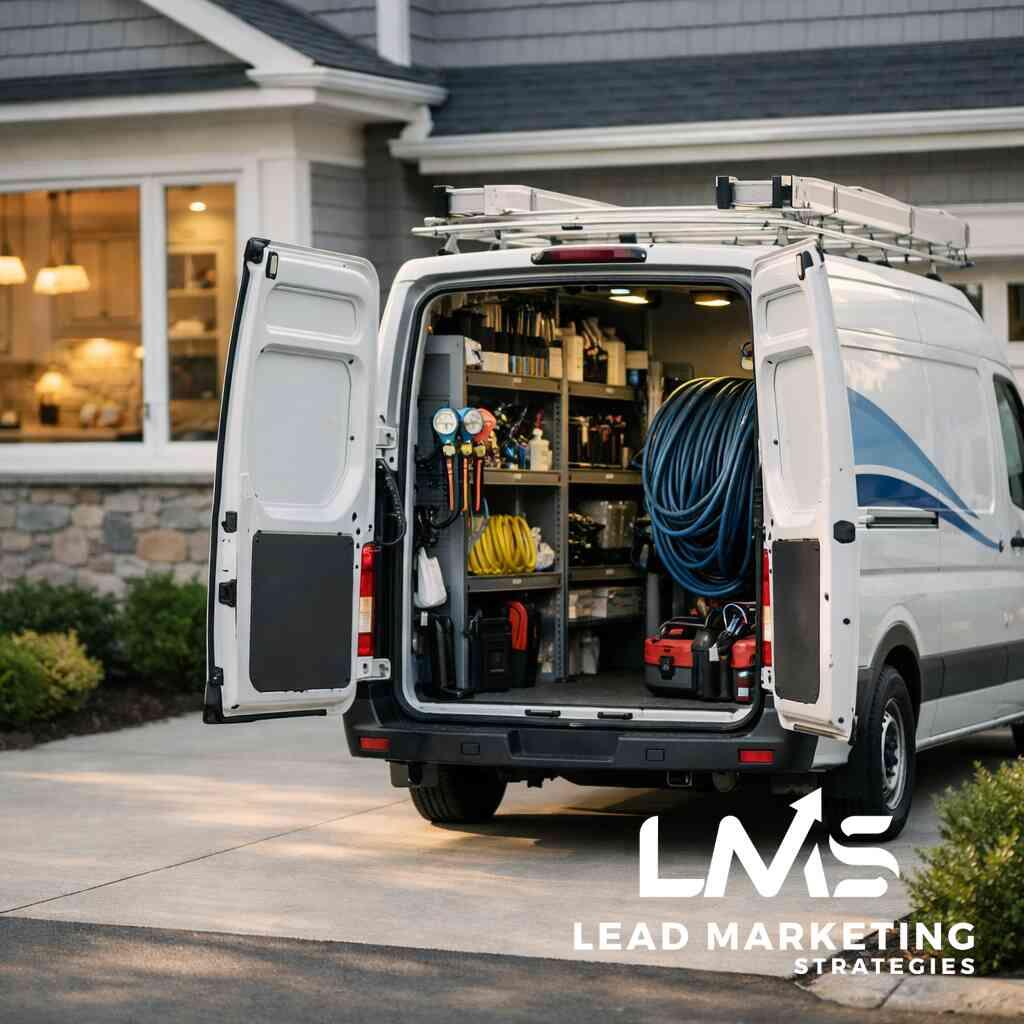
What makes a service page feel real to Google with borough names, nearby landmarks, and problem based keywords like emergency HVAC marketing
A strong page usually includes:
- A town or borough name in the title and copy
- A nearby landmark or known corridor
- A real service call scenario
- A short FAQ section
- Internal links to relevant service pages
I have seen pages outperform generic city pages simply by naming the actual neighborhoods a dispatcher hears every day. If you mention Huntington, Northport, or other nearby areas, do it naturally. Do not stuff them in. Google can tell the difference.
If you also run plumbing and HVAC under one roof, plumber lead generation and HVAC location pages should work together, not compete. That is especially useful for companies serving both residential HVAC SEO and commercial HVAC marketing.
-
Reviews and trust signals that move a hesitant homeowner from scroll to call
Reviews and trust signals help because most homeowners compare two or three contractors before they call. Good review velocity, clear response language, and visible proof reduce hesitation and improve click-through rate. In HVAC reputation management, the goal is not just star count. It is to make the homeowner feel safe enough to tap the number.
How online reviews for HVAC companies, review velocity, and response language shape reputation management and click through rates
Fresh reviews matter more than a pile of old ones. A steady stream tells Google and the customer that your crew is active, relevant, and reliable. I usually tell contractors to ask after a job is completed and the system is running properly, not after the invoice goes unpaid.
Response language matters too. Short, calm replies work best:
- thank them
- mention the service type
- reinforce reliability
- avoid canned corporate lines
A quick note on benchmarks: HVAC cost per lead often lands around $30 to $80, while plumbing commonly runs $15 to $40 depending on market and service type. Those numbers make reputation work worth it, because a stronger review profile can lower wasted spend across Google Ads and Facebook ads for HVAC. For broader brand work, our reputation management page ties those pieces together.
Which trust signals actually help residential HVAC SEO including licenses, badges, financing notes, and fast mobile proof
Trust signals that matter most are the ones people can verify fast:
- trade license number
- insurance note
- manufacturer badges
- financing options
- service guarantees
- emergency availability
I also like mobile-friendly proof near the top of the page. That means a tap-to-call button, concise service bullets, and a visible service area. If the page forces a homeowner to hunt for basic details, they leave.
For technical credibility, it helps to reference recognized bodies like PHCC and IAPMO. Those signals reinforce legitimacy without sounding forced. In one case, adding financing notes and cleaner mobile proof helped a contractor convert more after-hours visitors who were comparing three tabs at once.
-
Speed and mobile experience that keep a burned-out homeowner from bouncing to the next tab
Speed and mobile experience can make or break HVAC rankings because the homeowner searching during a heat wave or no-heat emergency is impatient. If the page loads slowly or the buttons are hard to tap, they leave before calling. Fast HVAC website speed optimization and mobile-friendly HVAC web design turn rankings into booked jobs instead of lost traffic.
Why HVAC website speed optimization and mobile friendly HVAC web design matter more when the weather spikes and calls stack up
I have watched crews lose good leads simply because the page took too long to open on a phone. A homeowner with a failed system is not patiently waiting for three image sliders and a pop-up. They are tapping the next result.
Keep the design clean:
- compress images
- reduce script bloat
- place the phone number in the header
- use short forms
- keep service pages focused
This is where HVAC conversion optimization and website design pay off together. I like to test the page on a real phone, not just a desktop dashboard, because that is how your customer experiences it.
How call tracking, conversion optimization, and local services ads HVAC turn higher rankings into booked jobs instead of tire kickers
Call tracking tells you which page, ad, or profile produced the lead. Without it, you are guessing. With it, you can see whether organic rankings, local services ads, or Google Ads are pulling their weight.
Here is a simple comparison:
ChannelStrengthBest useOrganic local rankingsLower long-term costSteady inbound callsLocal Services AdsHigh-intent leadsEmergency and same-day jobsGoogle AdsFast visibilityTargeted promotions and seasonal demandWe use that same logic across plumbing marketing services and HVAC campaigns. If you want help with ROI tracking for contractors, your site should connect call tracking, map visibility, and lead quality in one place. That is also where a specialized home service marketing agency earns its keep.
If you want a partner that already works inside plumbing marketing, heating and cooling marketing, and local search every day, Plumbing Marketing Strategies is a practical option. We focus on service businesses, so we understand dispatcher bottlenecks, slow shoulder seasons, and what actually turns clicks into booked calls. We work from Commack’s Northgate Shopping Center, serve contractors across all 50 states, and you can verify our presence on Google Maps or Apple Maps.
If you want a real plan, call +18335323100 or download the Plumbing Marketing Strategies app and book a consultation.
Frequently Asked Questions
Question: What are the top HVAC SEO signals that help improve local rankings fast, and how does Plumbing Marketing Strategies apply them for HVAC local SEO?
Answer: The fastest improvements usually come from Google Business Profile optimization, NAP consistency for HVAC, service area page optimization, online reviews for HVAC companies, and HVAC website speed optimization. At Plumbing Marketing Strategies, we build those signals into a full local SEO plan instead of treating them like isolated tasks. That means we refine your Google My Business for HVAC listing, align your business name, address, and phone number across citations, create stronger location-based SEO for HVAC pages, and improve your mobile-friendly HVAC web design so clicks turn into calls.
We also tie those signals to real lead generation goals. For example, a better map pack presence helps with emergency HVAC marketing, while stronger service page optimization supports heating repair marketing and air conditioning advertising. If you want a practical, contractor-focused plan from a home service marketing agency that understands local HVAC rankings, we can help you turn those signals into measurable booked jobs.
Question: How does Google Business Profile optimization support HVAC advertising strategies and local service area optimization for a contractor?
Answer: Google Business Profile optimization is one of the most important pieces of HVAC SEO because it tells Google exactly what you do, where you work, and which services you want to rank for. For contractors, that includes category selection, service area setup, photos, Q&A, and regular updates that support heating and cooling marketing. When these details are aligned correctly, your profile can improve map pack ranking factors and generate more qualified calls.
At Plumbing Marketing Strategies, we use this as part of a larger system that includes HVAC advertising strategies, local services ads HVAC, and Google Ads management for plumbers when needed. If you serve multiple towns or boroughs, we also apply local service area optimization so your profile supports the right nearby searches without looking generic. That matters for both residential HVAC SEO and commercial HVAC marketing because different customers respond to different signals. We make the profile work harder so your business shows up where homeowners are already searching.
Question: In the blog post Top 5 HVAC SEO Signals That Improve Local Rankings Fast, why are NAP consistency and local citations for contractors so important?
Answer: NAP consistency for HVAC is critical because Google needs to see the same business identity everywhere it looks. If your name, address, or phone number changes across your website, Google Business Profile, directories, and local citations for contractors, Google may read that as confusion or even a separate business. That can weaken trust, slow ranking growth, and make local HVAC rankings harder to improve.
We help contractors clean this up in a way that supports both SEO and operations. That includes auditing old citations, removing duplicates, fixing suite number issues, and standardizing the contact information used across HVAC web design, plumber website design, and other online assets. This process supports plumber lead generation, local plumbing SEO, and even HVAC reputation management because it creates a cleaner, more trustworthy digital footprint. At Plumbing Marketing Strategies, we focus on the details that make your business look stable and established to search engines and customers alike.
Question: How can reviews, trust signals, and HVAC reputation management improve click-through rate optimization and calls?
Answer: Reviews and trust signals do more than make your business look good. They influence whether a homeowner chooses you over the next contractor in the search results. Fresh review velocity for local SEO tells Google your business is active, and strong ratings plus thoughtful responses make your listing more clickable. That improves click-through rate optimization, which can support better visibility over time.
We recommend combining online reviews for HVAC companies with visible trust signals for contractors like licenses, insurance, financing notes, service guarantees, and emergency availability. These details matter especially for residential HVAC SEO, emergency HVAC marketing, and seasonal HVAC campaigns when customers need fast reassurance. Plumbing Marketing Strategies also helps contractors build a stronger brand strategy so your reviews, website content, and service pages all tell the same story. That consistency helps turn hesitant visitors into booked calls.
Question: What role do HVAC website speed optimization and mobile-friendly HVAC web design play in how to get more plumbing leads and HVAC calls?
Answer: Speed and mobile experience matter because most homeowners search on a phone, often during an urgent problem like no heat or no cooling. If your site loads slowly or the call button is hard to find, you can lose the lead even after ranking well. HVAC website speed optimization and mobile-friendly HVAC web design help keep visitors on the page long enough to call, request service, or fill out a form.
At Plumbing Marketing Strategies, we connect technical performance with HVAC conversion optimization and HVAC call tracking so you can see which pages actually generate business. That is valuable for best HVAC marketing strategies, affordable HVAC advertising, and ROI tracking for contractors because it shows where the leads are coming from. Whether you need support for HVAC content marketing, local services ads HVAC, or plumber digital marketing, we build the site so it performs well on both Google and real customers’ phones.
Question: How does Plumbing Marketing Strategies support nationwide home service marketing for HVAC SEO, plumbing marketing services, and local plumbing SEO?
Answer: Plumbing Marketing Strategies is built specifically for service businesses, so we understand the difference between ranking and actually booking jobs. Our team supports nationwide home service marketing through SEO, paid ads, content, and website work designed for contractors who need more calls, not just more traffic. That includes plumbing marketing services, HVAC SEO, plumber digital marketing, Google Ads for plumbers, Facebook ads for HVAC, and local plumbing SEO.
We also help with plumbing content marketing, plumber marketing tips, plumber reputation management, HVAC social media marketing, HVAC email marketing, and emergency plumber marketing when a contractor needs a broader growth plan. If you want to improve plumber lead generation, build stronger heating and cooling marketing, or create better HVAC advertising strategies, we can help you connect all the pieces. Our goal is simple: make your digital marketing easier to manage, easier to measure, and more likely to produce real booked work.
Every article is written by one of our founders and independently reviewed by the other before it goes live.

Ken Key is the Chief Technology Officer and Co-Owner of Plumbing Marketing Strategies. He is a full-stack software, AI, and SEO engineer who helps plumbing companies turn their websites and lead flow into real booked jobs. He runs the agency with his wife and co-owner, Dominique Key, and treats every client like a neighbor.

Dominique Key is Chief Marketing Officer and Co-Owner of Plumbing Marketing Strategies. She helps plumbing company owners turn their reputation into steady, predictable lead flow. A wife and mom, she runs the agency with her husband Ken and treats every client like family.